 Select Language
 English
 Spanish
 Polish
 Japanese
 Italian
 French
Eco-Friendly Foam Recycling for Medical EPS Cold Chain Packaging
In medical logistics, many products require strict transportation conditions. For example, cold and hot packs, glucose reagents, and certain biological reagents must be transported through cold chain systems to hospitals, laboratories, or pharmacies. During transportation, a combination of EPS coolers and outer cartons is commonly used to maintain stable temperatures and provide effective cushioning and protection.
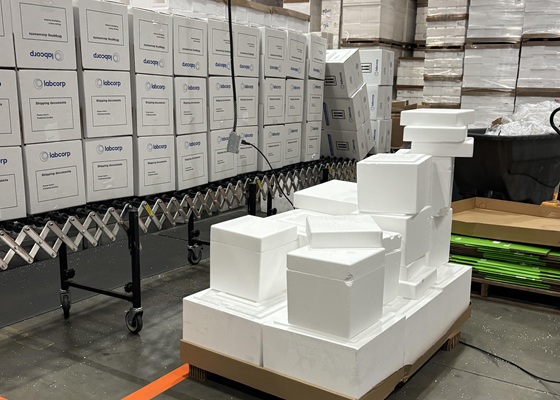
However, throughout this supply chain, both EPS cooler manufacturers and medical institutions generate large amounts of packaging waste. For manufacturers, common waste includes damaged EPS boxes from production and returned packaging from customers. Hospitals, laboratories, and pharmacies also produce significant EPS waste when unpacking reagents and cold chain medical supplies.
In the past, much of this foam packaging was sent directly to landfills, which not only occupied valuable space but also increased disposal costs. As a result, more medical organizations are paying attention to foam recycling and seeking environmentally responsible and sustainable solutions.
Recycling Solutions for Medical EPS Packaging
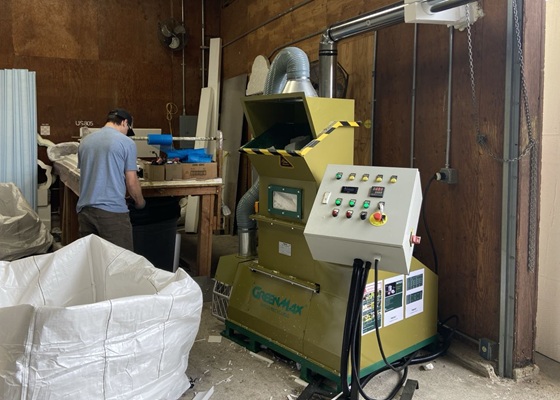
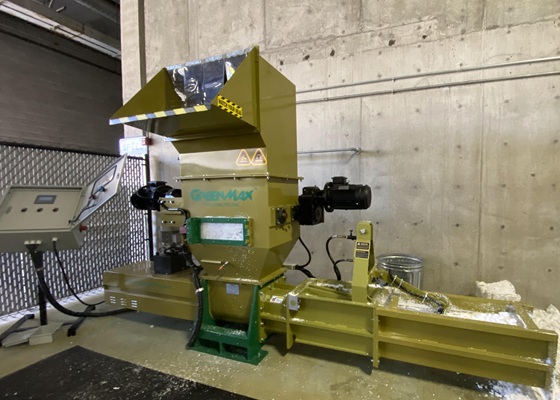
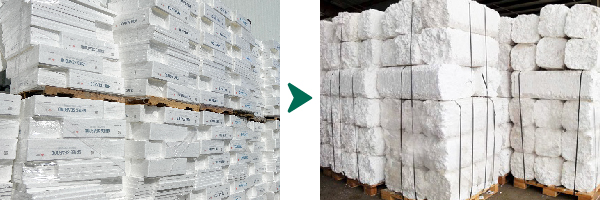
For EPS packaging waste, using a foam compactor to reduce volume is currently one of the most common and cost-effective recycling solutions. The machine compresses bulky EPS foam into high-density blocks, which can then be sold to local pelletizing companies or packaging manufacturers for reuse.
In the medical sector, the most common challenges include:
· Foam waste taking up valuable warehouse space
· High costs for third-party waste collection
By compressing loose EPS foam, companies can significantly reduce its volume, lowering both storage and transportation costs. Equipment configuration may vary depending on the scale of operations.
For EPS cold chain packaging manufacturers, GreenMax typically recommends a standard foam compactor with a capacity of 200 kg/h to handle consistent production waste.
For hospitals, laboratories, and pharmaceutical distribution warehouses, a smaller Styrofoam densifier with around 50 kg/h capacity is often sufficient. These compact machines require lower investment and minimal space and can be placed directly in warehouses for daily waste processing.

Two Recycling Methods: Cold Compression and Hot Melting
Currently, medical foam recycling mainly uses two types of Styrofoam densifier: cold compression and hot melting.
Cold compression machines physically compress EPS using a screw system, producing dense blocks with a compression ratio of about 50:1. Since no heating is required, this process generates no odors and consumes less energy, making it suitable for medical environments with strict environmental standards.
The second option is hot melting. In this process, the foam compactor first shreds the foam, then melts the EPS using a heating system. The molten material is extruded through a screw to form dense ingots with a compression ratio of up to 90:1. This higher compression significantly reduces material volume and lowers transportation costs.
Both methods enable efficient Styrofoam recycling. Companies can choose the most suitable solution based on waste volume, available space, and budget.
If your waste volume is currently unstable and you prefer not to invest in equipment right away, you may also consider renting nearby equipment or outsourcing the processing to local companies using GreenMax machines. Contact GreenMax for assistance in locating nearby equipment users and establishing a partnership.
Why Choose GreenMax
In medical packaging recycling, equipment stability and safety are especially important. GreenMax foam compactors offer several advantages in design and manufacturing.
Key components are sourced from internationally recognized brands such as Siemens, Schneider, and NSK, ensuring reliable performance and long-term operation.
Before delivery, each machine undergoes full testing using customer waste samples or foam with similar density and size. This ensures the equipment meets real processing requirements and reduces setup time after installation.
GreenMax also provides reliable after-sales service, including 24-hour online response and annual on-site factory visits. In some regions, local service offices offer on-site maintenance and repairs to keep the Styrofoam densifier operating efficiently.
In addition, GreenMax offers an EPS compressed block purchasing program, helping customers build a stable foam recycling channel so recycling becomes both environmentally beneficial and economically valuable.
Common Questions About Medical EPS Recycling
1. Can medical Styrofoam packaging be recycled?
Yes. Medical Styrofoam packaging is typically clean, and the compressed material remains white and high quality, making it attractive to downstream pelletizing companies.
2. If EPS waste volume is small, is investing in equipment worthwhile?
For facilities with smaller waste volumes, a mini foam compactor is usually sufficient. These compact machines require lower investment and can often pay for themselves within one year through the sale of compressed EPS blocks. The equipment can also be rented out to other organizations to generate additional income.