 Select Language
 English
 Spanish
 Polish
 Japanese
 Italian
 French
GreenMax Pelletizing Machine — Driving Closed-Loop Expanded Polypropylene Recycling in Automotive Industry
In modern automotive manufacturing and logistics, EPP (expanded polypropylene) is widely used for component trays, interior padding, seat supports, and battery packaging.
However, as production and transport volumes grow, large amounts of discarded or damaged EPP trays are generated.
Although EPP foam is lightweight and bulky, it’s still essentially reusable polypropylene.
The key question is: how can this “waste” be turned back into a valuable resource? — That’s where EPP recycling comes in.
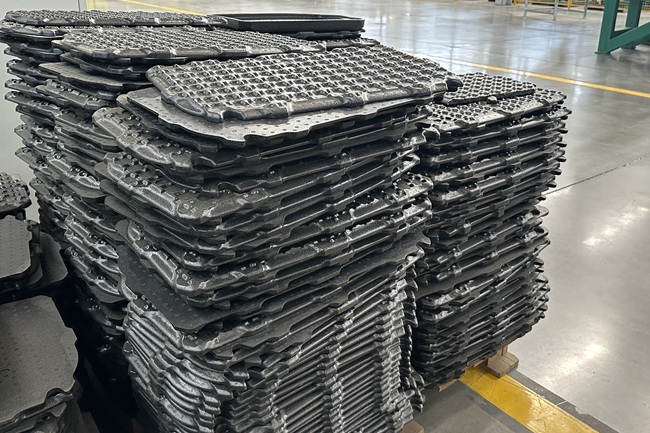
From Waste to Recycled PP Pellets
One of the biggest advantages of EPP foam is its excellent recyclability. With a professional pelletizing machine, used EPP materials can be crushed, melted, extruded, and reformed into high-quality recycled PP pellets.
The expanded polypropylene recycling process includes:
1. Collection & Pre-Treatment
Discarded EPP foam from automotive trays, packaging pads, or transport boxes is collected and sorted—manually or mechanically—to remove metal, paper, and other impurities, ensuring pellet purity.
2. Crushing & Melting
Pre-treated foam is fed into an EPP foam granulator. Because EPP is bulky, it’s first crushed by a foam crusher into small, uniform pieces before entering the heating chamber.
Inside the pelletizing machine’s heated screw system, the EPP fragments are gradually heated to polypropylene’s melting point (around 160–170°C). At this stage, the foam structure fully collapses, turning into a uniform molten polypropylene.
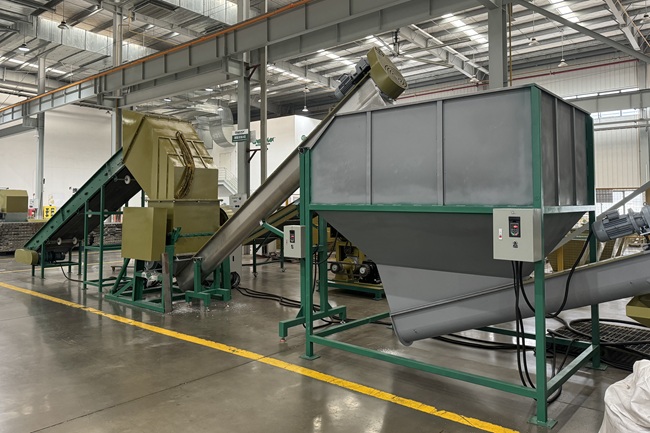
3. Filtering & Extrusion
The melted EPP passes through a filter to remove any remaining impurities. Then, the molten material is extruded by the screw system through a pelletizing die, forming thin strands that are cooled in a water tank.
Notably, the GREENMAX EPP foam granulator uses a hydraulic or laser screen changer, allowing non-stop filtering for smoother operation and higher pellet purity.
4. Pellet Cutting & Cooling
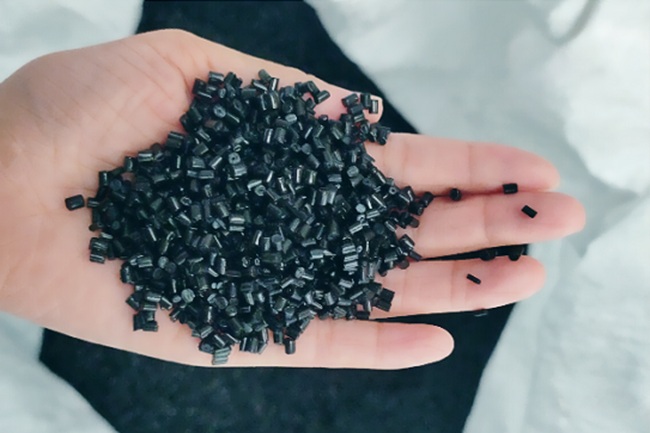
After cooling, the plastic strands are cut by an automatic cutter into uniform pellets—recycled PP granules. These can be directly used for injection molding, extrusion, or foaming to produce new EPP products.
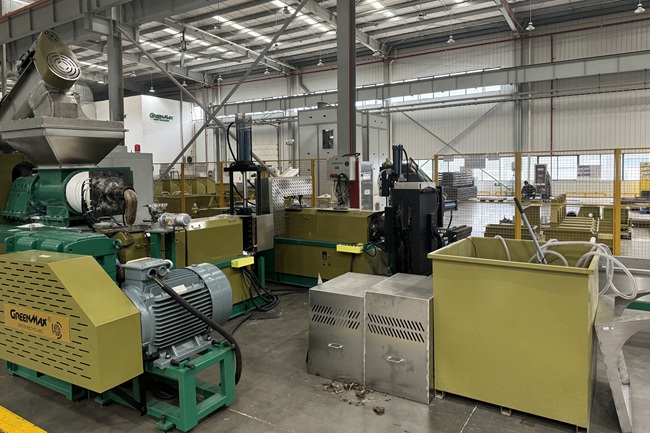
100% EPP Recycling — A Sustainable Future
The final recycled PP pellets are dried, screened, and bagged for storage, ready to re-enter the production line for making new automotive trays, cushioning parts, or packaging materials. These pellets offer stable performance and fully meet the strength, toughness, and environmental standards of the automotive and packaging industries.
With the GREENMAX pelletizing machine, a closed-loop expanded polypropylene recycling system becomes possible—helping to:
• Reduce consumption of virgin PP materials
• Minimize landfill waste
• Lower carbon emissions and environmental impact
• Support the automotive industry’s sustainability and circular economy goals
As Europe and the rest of the world push for a stronger circular economy and carbon reduction, the EPP recycling market is growing rapidly.
For automakers, parts suppliers, and packaging providers, building a complete expanded polypropylene recycling system not only cuts costs but also enhances sustainability credentials and strengthens market competitiveness.