 Select Language
 English
 Spanish
 Polish
 Japanese
 Italian
 French
Styrofoam Recycling Solutions for Packaging Waste in the Appliance Industry
“I’m an appliance distributor, and business has been good.”
Every day, customers purchase refrigerators, washing machines, TVs, and air conditioners from our store. To improve service, we not only sell appliances but also provide delivery and installation. After installation, we bring all the packaging waste back to our warehouse so customers don’t have to deal with it.
Recently, however, our warehouse has run into a problem—it’s full. Not because of appliances, but because of large amounts of EPS (Styrofoam) packaging foam.
As our business grows, we unpack appliances daily in the warehouse. Combined with e-commerce deliveries, installation services, and the upcoming summer sales season, EPS foam waste keeps increasing. The packaging foam from just one TV can occupy 0.1–0.2 m³. If dozens of appliances are unpacked each day, it doesn’t take long to fill an entire corner of the warehouse. Even though the foam is lightweight, it takes up a lot of space.
In the past, we relied on third-party waste collectors, but the costs kept rising. Landfilling wasn’t cheap either, and environmental regulations for plastic waste are becoming stricter. So we started looking for a better solution that could:
· Reduce the cost of handling Styrofoam packaging
· Free up warehouse space and prevent waste accumulation
· Comply with local environmental regulations

How the Appliance Industry Can Achieve Efficient EPS Recycling
To meet the recycling needs of appliance distributors, GreenMax offers a simple and practical solution: use an Apolo series Styrofoam compactor or a Mars series EPS densifier to reduce the volume of foam waste. The compressed material can then be sold to GreenMax or other recyclers.
After Styrofoam recycling, the material can be processed into raw material for new products such as picture frames, baseboards, and gardening products—creating a circular resource loop.
This approach not only solves foam accumulation problems but also reduces disposal costs and generates recycling revenue. In most cases, the investment in standard equipment can be recovered within 1–2 years through the sale of compressed EPS blocks.

Apolo Series: The Most Eco-Friendly and Energy-Efficient Option
The Apolo series Styrofoam compactor uses a cold-press process that compresses foam through a screw system. Since no heating is required, the machine operates without odor and consumes less energy. It also preserves the physical properties of the foam, making it suitable for producing high-quality recycled products—an environmentally friendly EPS recycling solution.
After compression, foam volume can be reduced by up to 50:1, significantly lowering transportation and storage costs. Another advantage is that the machine can process wet foam waste, which is common in warehouse and distribution environments.

Mars Series: The Best Choice for Maximum Volume Reduction
The Mars series EPS densifier uses a thermal melting process to reduce foam volume. The foam is melted and extruded into high-density blocks with a compression ratio of up to 90:1. Compared with mechanical screw compression alone, the Mars series achieves greater volume reduction and denser output, further reducing transportation costs.
Because the process involves heat, some odor is unavoidable during operation. However, GreenMax has optimized the design with a professional exhaust system, SGS odor testing reports, and improved hopper and protective cover designs to minimize odor emissions.

When Waste Volume Is Unstable, Mars Is the Better Styrofoam Recycling Choice
For smaller appliance distributors, foam waste generation may not always be consistent. If the volume of waste is relatively small and continuous feeding is difficult, the Mars series EPS densifier is often the better option.
When feeding is uneven, cold-press machines may produce blocks with inconsistent weight, while thermal densifiers handle irregular input more effectively. For example, the GreenMax M-C50 occupies roughly the footprint of a cardboard box and requires a lower investment cost, making it ideal for businesses with limited foam waste that still want to implement EPS recycling.

Real Cases: Styrofoam Recycling in Appliance Logistics
GreenMax has helped many appliance distributors and logistics companies address similar challenges.
Mainfreight (New Zealand): A company providing last-mile appliance delivery services for brands such as Samsung, Farmers, and Fisher & Paykel. Every two to three days they accumulated about one pallet of loose packaging foam. By installing a GreenMax Styrofoam compactor A-C100, they successfully solved the problem of Styrofoam waste accumulation.
PG&E (USA): During a refrigerator replacement program, large amounts of EPS foam waste were generated. With three distribution centers delivering around 200 refrigerators per day, PG&E installed three GreenMax Mars series EPS densifiers in its warehouses in Hayward, Fresno, and Colusa to efficiently complete Styrofoam recycling.
Meeting the Recycling Needs of Appliance Distributors
Through EPS recycling, appliance distributors can address multiple operational challenges:
· Lower waste handling costs by reducing disposal or landfill fees and generating revenue from selling compressed EPS blocks.
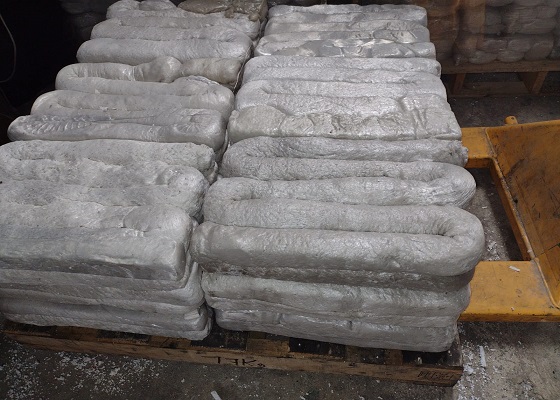
· Reduce storage space and waste accumulation by achieving volume reduction ratios of 50:1 or 90:1, turning loose foam into dense, stackable blocks.
· Meet environmental requirements as compressed Styrofoam can be recycled into new products and re-enter the material cycle.
If you’d like to see how the Apolo or Mars systems operate in real conditions, you’re welcome to visit the GreenMax facility for a live equipment test and observe the machines in action.